Harte Research Institute Beach Combing Program Wins a Year of Gulf Coast Funding |
The Harte Research Institute at Texas A&M University-Corpus Christi received a $25,000 donation from Phillips 66 in July 2026 to fund a full year of its beach combing program, which takes participants to Gulf Coast beaches to find and learn about marine debris and coastal ecosystems. The funding will support school presentations and a public community event this fall on Padre Island. |
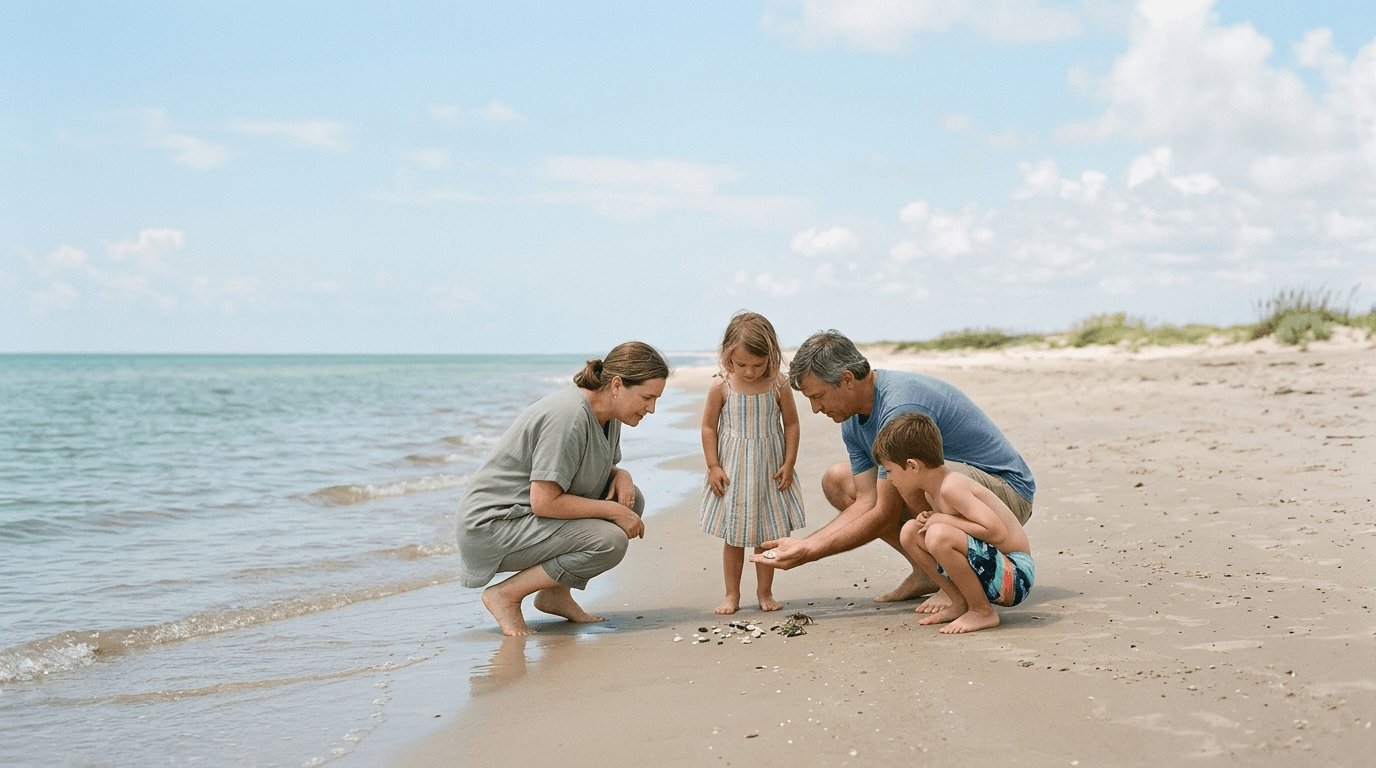
If you have ever picked up something unexpected on a Corpus Christi beach and wondered what it was, there is a program at Texas A&M University-Corpus Christi built around exactly that curiosity. The Harte Research Institute's beach combing program takes participants out to Gulf Coast beaches not to clean up in the traditional sense, but to find things, identify them, and understand what they mean about the coastal ecosystem they come from.
In July 2026, that program received a $25,000 donation from Phillips 66, enough to fund a full year of operations. For a program built on direct experience with the Gulf, that kind of financial runway matters. It means more school visits, more public events, and more Corpus Christi families getting a chance to stand on a beach with someone who can explain what they are looking at.
The Philosophy Behind Beach Combing
The program is led by Jace Tunnell, the Harte Research Institute's Community Engagement Coordinator. Tunnell's approach is straightforward: get people interested in what they find on the beach, and they will want to protect it. That sequencing matters. Telling someone to care about marine conservation without first giving them a reason to be curious about it rarely sticks. Putting a piece of marine debris in someone's hand and explaining where it came from and what it says about the water nearby is a completely different experience.
The Harte Research Institute describes its mission as advancing the long-term sustainable use and conservation of the Gulf, integrating marine science with policy, social science, and economics. The beach combing program is the community-facing expression of that mission: taking the work that researchers do in labs and field stations and making it accessible to residents, students, and families who live along the same coastline.
What the Funding Makes Possible
The $25,000 Phillips 66 donation will support two things specifically. The first is expanded school presentations, bringing the beach combing experience into classrooms before students ever set foot on the sand. The second is a public community event this fall on Padre Island, open to Corpus Christi families who want to participate directly in a guided beach combing session with Tunnell and the Harte team.
For families with kids heading back to school this August, that fall event on Padre Island is worth putting on the calendar. A guided Gulf Coast beach walk that teaches participants to identify marine debris, spot living coastal animals, and understand what a healthy ecosystem looks like along our particular stretch of shoreline is not something that happens every season. The Phillips 66 funding makes it possible to offer that experience to the wider community, not just to school groups.
Corpus Christi's relationship with the Gulf has always been central to what life here looks like. The Seawall, the fishing boats, the shrimp on the menu at local restaurants, the way the salt air follows you home from a weekend on the island. The Harte Research Institute works to understand that ecosystem at a scientific level, and the beach combing program is how that understanding gets passed along to the people who live closest to it.
A Program Worth Knowing About
The Harte Research Institute is an interdisciplinary program that brings together experts from across the United States, Mexico, and Cuba to study the Gulf of Mexico, which is the ninth-largest body of water in the world. That tri-national, cross-disciplinary approach produces science-driven solutions that go well beyond what any single institution could generate on its own. The Harte Research Institute Beach Combing Program sits at the edge of that large research operation, making the most tangible part of it available to the neighbors who live along the Gulf's Texas shore.
Visit the Harte Research Institute community programs page to learn more about the beach combing program, find out when the fall Padre Island event is scheduled, and sign up to stay informed about school presentations and future public sessions along the Corpus Christi coastline. |
18 Comments
Join the conversation
Would be great if they posted more pics of the finds online for folks who can't make it to the beach every time.
Love that this connects researchers with actual locals. It makes science much less intimidating.
Saw some weird egg case on the shore last week. Maybe now I can find out what it is!
Cool project but I wonder if just one event per year is enough? Feels like it should be a regular thing.
If anybody needs a ride to Padre Island from Flour Bluff for the fall event let me know!
Never knew the Gulf was the ninth largest body of water. Learned something new today!
I hope people listen and stop leaving junk on the sand. It always ruins an otherwise perfect day.
So glad Harte brings science into the community. Wish this was around when I was a kid.
Beachcombing is way more fun when you know what you're finding. Looking forward to hearing more about the public event.
Awesome initiative. Someone needs to teach folks the difference between trash and natural debris!
Is there a way to volunteer with them? I'd love to help at the Padre Island event.
Bringing this to the classrooms is the smart part. Not all kids get out to the beach often.
I still pick up shells every time I'm on the sand. Maybe I'll finally find out what some of them actually are lol.
$25,000 seems small for such an important program honestly. Hope other companies help too.
We've seen Jace Tunnell on the beach before, super knowledgeable! My family will definitely try to make the Padre Island walk.
I wish there were more year-round programs like this. Not everyone knows what to look for at the beach.
Glad to see Phillips 66 putting money into something positive for once. The coast could use more of this.
I think it's great getting kids curious about the beach instead of just telling them to care. Hands-on always works better for my grandkids.